
You can roast beautifully and still be stuck with whatever coffee your importer happened to buy this year. The lot changes, the story behind it gets thinner with every middleman, and when you ask where it grew, the answer is a country and a shrug. The roast is yours. The bean should be something you can stand behind just as proudly.
What Are Green Coffee Beans?
Green coffee beans are the raw, unroasted seeds of the coffee cherry, picked, stripped of their fruit and dried until they are ready to roast. Every flavor in a finished cup is already inside the green bean. Roasting is what unlocks it. We grow green coffee on our own farms in Quindío, Colombia, and sell it straight to roasters, cafés, importers and coffee brands around the world, starting at 150 kg.
Coffee is a fruit. Each red cherry on the tree holds two seeds. After harvest, the fruit is removed by washing or left to dry around the seed in the sun, and the seeds are dried to a stable moisture level and hulled. What comes out is a hard, pale green bean that smells more like fresh peas than coffee. In that form it can travel across an ocean and sit in a warehouse for months without losing much, which is why nearly all coffee crosses borders green and gets roasted close to where it will be sold.
People also call them unroasted coffee beans or raw coffee beans. Same thing. The name just tells you what stage of the journey the coffee is in.
Green Coffee Beans vs Roasted Coffee Beans
The bean is the same seed before and after the roaster. Almost everything else about it changes. Here is the difference at a glance.
| Green coffee beans | Roasted coffee beans | |
|---|---|---|
| Color and feel | Pale green to yellow-green, hard and dense | Light to dark brown, brittle and lighter |
| Smell | Grassy, like fresh peas or hay | The coffee aroma you know |
| Can you brew it | Not into anything that tastes like coffee | Yes, once ground |
| How long it keeps | Months when stored cool, dry and dark | Weeks for peak flavor |
| Who controls the flavor | You do, through the roast | Whoever roasted it |
| What you pay for | The bean itself | The bean plus roasting, packing and the roaster's margin |
That last row is the reason roasters buy green. When you roast yourself, you decide how light or dark the coffee goes, how fresh it is when it reaches your customer, and which story goes on the bag. You also stop paying someone else to make those decisions for you.
The Green Coffee We Grow in Quindío
Our family has grown coffee in Quindío for five decades and five generations. Our twenty farms sit high in the Andes, between 3,600 and 7,100 feet above sea level, with more than 2.6 million coffee trees and a team of 1,000 people who pick by hand. We process, roast and pack in Colombia ourselves, and we export the coffee directly. Nobody stands between you and the people who grew your beans.
These are the varieties and processes in our current line. Altitudes are for the specific farms each coffee comes from. The tasting notes describe each coffee at a medium roast, so treat them as a starting point for your own profile.
| Variety | Process | Farm area | Altitude | At a medium roast | Good fit for |
|---|---|---|---|---|---|
| Red Castillo | Washed | Córdoba, Quindío | 5,280 to 5,777 ft | Sugar cane, bittersweet chocolate, dried fruit. Sweet and forgiving. | House coffee, espresso blends, batch brew |
| Red Caturra | Natural | Circasia, Quindío | 5,249 ft | Creamy caramel, Cabernet Sauvignon, lemon and ripe pineapple | A featured single origin with a bold fruit story |
| Pink Bourbon | Natural | Calarcá, Quindío | 5,161 ft | Florals, purple berries, rosé wine | Specialty menus, pour over, competition-style offerings |
| Geisha | Natural | Pijao, Quindío | 5,741 ft | Maple honey, caramel, red and purple berries | Limited releases, gift sets, top-shelf pour over |
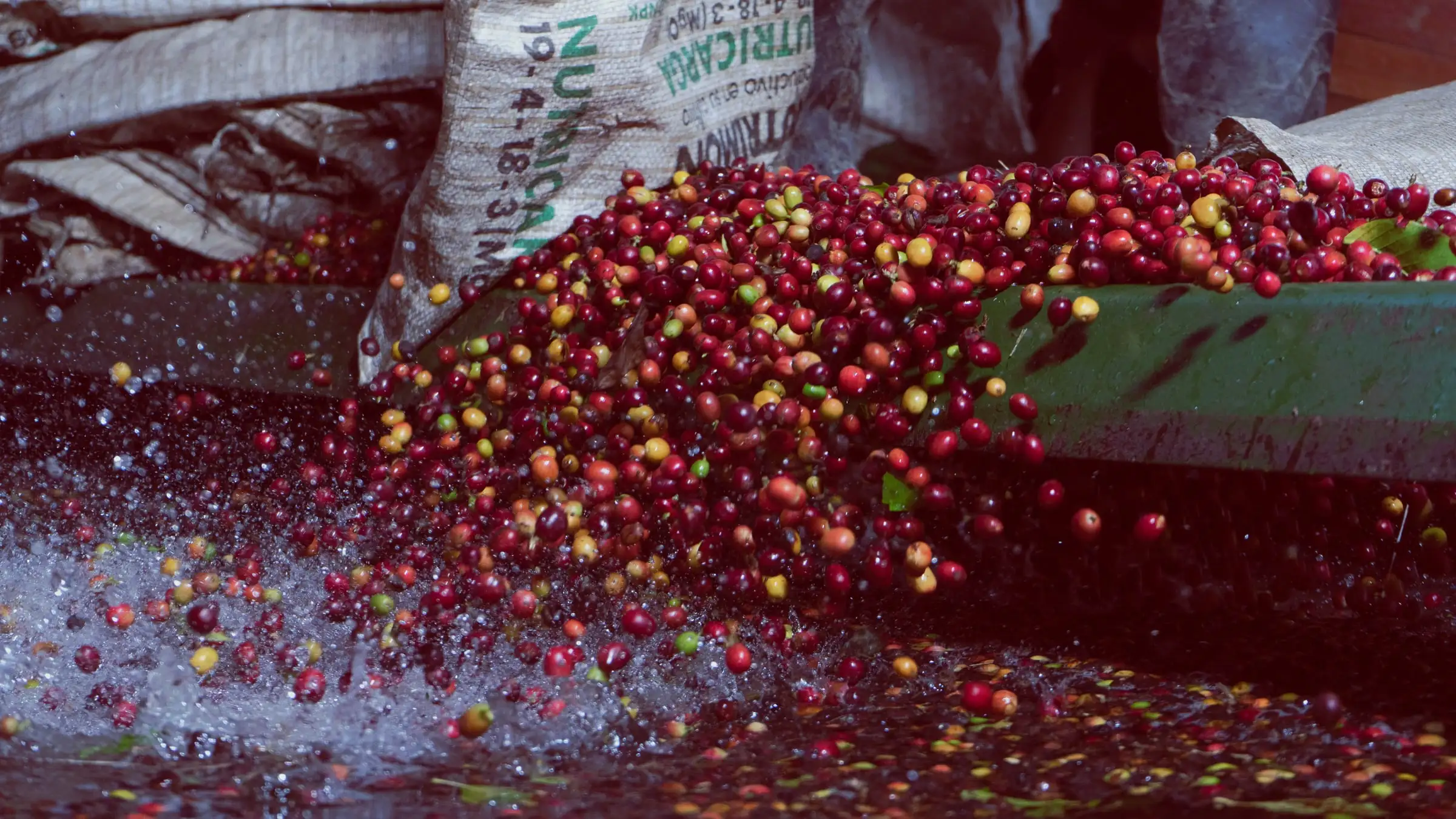
Castillo is the workhorse. It was bred in Colombia by Cenicafé, the research center of the National Federation of Coffee Growers (FNC), to resist coffee leaf rust, and it gives a sweet, balanced cup that takes milk well and holds up in an espresso blend. Caturra is an older, smaller tree with a more intense cup. Pink Bourbon and Geisha are the coffees people cross a café to try. Our naturals dry slowly in the sun on raised beds, which builds the fruit and sweetness you taste in the cup.
Who Buys Green Coffee Beans From Us
Our green coffee goes to businesses that roast, or that sell to people who roast. Here is how each kind of buyer tends to use it.
| Buyer | What they usually buy | Why it works for them |
|---|---|---|
| Specialty roasters | Single origin lots by variety and process | A traceable Colombian coffee with a named farm region, and a grower you can call when the next harvest comes in |
| Cafés that roast in-house | One dependable washed lot plus one rotating specialty lot | A steady house coffee that stays consistent, and a second coffee that gives regulars something new |
| Importers and distributors | Repeat volume on clear Incoterms | One supplier who grows, processes and exports, so fewer hands touch each shipment |
| Coffee brands planning to roast | Green coffee now, private label roasting later if you want it | Start roasting yourself and switch to coffee roasted and packed at origin when that makes more sense |
A quick word for coffee brands. If you would rather not run a roaster at all, we also roast and pack coffee at origin under your own label. Some of our partners start with green coffee and switch, and some go the other way. The beans are the same either way.
Buying Green Coffee From the Farm vs an Importer or Retailer
There are three common ways to buy green coffee. None of them is wrong. Each one suits a different buyer, and the best choice depends on how much you roast and how many origins you want on your shelf.
| From our farms | Green coffee importer | Home roasting retailer | |
|---|---|---|---|
| Who you buy from | The family that grows it | A trading company buying from many farms | A shop reselling an importer's lots |
| Traceability | Farm region, variety, process and altitude | Usually region or cooperative, sometimes farm | Varies, often country and region |
| Order size | 150 kg first order, 50 kg reorders | Often full bags or pallets | One pound and up |
| Price per kilo | No retail markup, quoted by volume | Includes the importer's margin | Highest per kilo |
| Variety of origins | Colombian only | Many countries | Many countries |
| Best for | Businesses that want a direct Colombian source | Roasters buying many origins at scale | Home roasters and very small test batches |
Importer and retailer columns describe typical options and vary by company. Plenty of good importers do excellent, traceable work.
If you roast coffee from ten countries, a good importer is hard to beat. If Colombia is one of your core origins, or you want to tell customers exactly whose farm their coffee came from, buying from the grower gives you a shorter chain, a clearer story and a supplier who knows every lot personally.
Colombian Green Coffee Beans by Region and Variety
Colombia grows almost entirely arabica, mostly on small farms on steep Andean slopes, and most of it is picked by hand. The FNC counts more than 500,000 coffee-growing families across the country. Most coffee regions have a main harvest and a smaller second crop called the mitaca, so new Colombian coffee comes off the farms at more than one point in the year. Within that, region, variety, process and altitude decide what a lot tastes like. Here are the questions green coffee buyers ask us most often.
How long do green coffee beans last?
Stored well, green coffee keeps its quality for months. It does not spoil like fresh food, but it slowly fades. The bright acidity goes first, then the sweetness, until the coffee tastes flat and papery, which roasters call "baggy." How fast that happens depends on how the coffee was dried and how it is stored.
Moisture and heat are the biggest risks. Keep green coffee in a cool, dry, dark room, off the floor and away from walls, in its sealed bags. Avoid storing it next to anything with a strong smell, because green beans absorb odors. Roast your oldest lot first and plan purchases so you finish each one before the next harvest lands.
How do you roast green coffee beans?
Roasting is heat applied over time. In the first stage the beans dry out and turn from green to yellow, and they smell like toasted grain. Next they brown as sugars and amino acids react, which builds sweetness, body and aroma. Then comes first crack, a popping sound as steam escapes the bean. That marks a light roast. Keep going and the coffee develops more body and less acidity, until second crack, a quieter snapping that signals a dark roast.
Colombian coffee is forgiving in the roaster. Dense, high-grown beans like ours take heat evenly and hold sweetness through a medium roast, which is why so many cafés use a washed Colombian as their house coffee. Naturals like our Pink Bourbon and Geisha shine at a lighter roast that keeps their fruit and florals. Start with a small batch, taste at a few roast levels, and write down what works.
How much do green coffee beans cost per pound?
There is no single price, and anyone quoting one without asking questions is guessing. Green coffee pricing starts with the world arabica market (the "C" price traded on ICE futures), then adds a premium or discount for origin, grade and quality. On top of that come variety, process, certification, freight and import costs.
A washed Castillo for a house blend and a natural Geisha for a limited release sit at very different points on that scale. We quote by product and quantity, with volume discounts, so tell us what you want to roast and how much you need, and we will send a real number.
What is a coffee cupping score?
A cupping score is how a trained taster rates a coffee on the Specialty Coffee Association (SCA) 100-point scale. The cupper brews the coffee in a standard way and scores attributes like fragrance, flavor, aftertaste, acidity, body, balance and sweetness. Coffee that scores 80 points or more counts as specialty grade under the SCA standard.
A score is useful, but it is one person's read on one sample. Use it to shortlist lots, then cup samples yourself with your own water and your own roast. The coffee your team reaches for twice is the one to buy.
Importing Green Coffee Direct From Colombia
Buying direct from a Colombian exporter sounds complicated. In practice it comes down to choosing a supplier, agreeing on who handles which leg of the trip, and making sure your paperwork is ready on your side of the border. We prepare the export from Colombia and ship to roasters and importers around the world.
How do you import coffee from Colombia?
Start by choosing an exporter and cupping samples. Once you pick a lot, agree on the Incoterm, which sets where our responsibility ends and yours begins. With FOB, we deliver the coffee onto the vessel in Colombia and you handle the ocean freight. With CIF, we pay freight and insurance to your destination port. With DAP, we deliver to your named place and you clear customs and pay duties. With DDP, we handle everything, including customs clearance and import duties, and deliver to your address.
New importers often start with DAP or DDP so they can learn the process without managing every step at once. As volumes grow, many move to FOB or CIF and work with their own freight forwarder.
What do you need to import coffee into your country?
Every market has its own rules, so talk to a customs broker in your country before your first shipment. In the United States, for example, coffee is regulated as food by the FDA, which requires foreign food facilities to be registered and requires prior notice before imported food arrives. The European Union, the United Kingdom and other markets have their own food safety and customs requirements.
If that sounds like a lot to manage on a first order, choose DDP and we will handle the customs clearance and duties for you. You can take on more of the process yourself on later orders.
How to Judge a Green Coffee Lot Before You Buy
A good green coffee supplier will answer these questions without hesitation. Ask them of anyone you buy from, including us.
| Check | What to ask for | Why it matters |
|---|---|---|
| Variety and process | Castillo, Caturra, Pink Bourbon or Geisha, and washed or natural | These two choices shape flavor more than anything else in the bag |
| Altitude and region | Where on the mountain the coffee grew | Higher, cooler farms ripen cherries slowly, which tends to bring more sweetness and acidity |
| Screen size and grade | Supremo (screen 17 and up) or Excelso (14 to 16), per FNC export grades | Even bean size helps beans roast evenly in the same batch |
| Cup score | A score on the SCA 100-point scale, where 80 and up counts as specialty | It tells you how the coffee tasted to a trained cupper, which a grade alone cannot |
| Moisture | The SCA green grading standard calls for 9 to 13% | Too wet risks mold and fading flavor, too dry roasts fast and flat |
| Harvest date | Which harvest the lot came from | Green coffee keeps for months, but fresher crop holds its brightness longer |
Then roast a sample the way you would roast for customers. Specs tell you whether a coffee is sound. Only the cup tells you whether it belongs in your lineup.
Minimums, Timing and Shipping
Here are the practical details, so there are no surprises later. A first order of green coffee starts at 150 kg, and reorders start at 50 kg. A first order takes about 45 days, which leaves time for sampling and a final quality check. Reorders usually ship in 1 to 4 weeks, depending on size.
We ship in bulk from Colombia to almost anywhere in the world on FOB, CIF, DAP or DDP terms, to your roastery, warehouse or 3PL. We do not drop ship. Pricing depends on the coffee and the quantity, with volume discounts. If you need a certification such as organic, Fair Trade or Rainforest Alliance, tell us when you ask for a quote and we will confirm what is possible and include any costs.
How Ordering Green Coffee Works
- Tell us what you roast. Your roaster size, how much you roast a month, and the flavor you sell. One line is enough to start.
- Pick your lots. We suggest varieties and processes that fit, and you choose the coffee you want to cup.
- Sample and confirm. Your first order includes sampling and a final quality check before anything ships.
- We export it to you. We prepare the export from Colombia and ship on the Incoterm you choose to your roastery, warehouse or 3PL.
After your first order, reordering is one email. Tell us the lot and the kilos and we take it from there.
A Note for Home Roasters
Many people who search for green coffee beans roast a pound at a time at home, in a popcorn popper, a skillet or a small drum roaster. We love that you do. Our 150 kg minimum is built for businesses, though, so a home roasting retailer that sells by the pound is the better fit for most hobby roasters.
If you are a home roaster thinking about going pro, or a group of roasters who want to split a lot of Colombian coffee, get in touch. That is often how a roasting business starts.
Why It Matters Who Grows Your Green Coffee
We pay our farmers double the average coffee farmer wage, so they do not have to leave for a second job in the city. We also give 30% of our profits to missions work, including help for people in the Venezuelan refugee crisis, teaching Colombians how to earn more, and health clinics through the Christian and Missionary Alliance of Colombia.
For a roaster, that becomes a story you can put on your bag and back up, with real names and a real place. You are welcome to visit the farms in Quindío, walk the rows where your coffee grows and meet the families who pick it.
Green Coffee Questions
What are green coffee beans?
Green coffee beans are the raw seeds of the coffee cherry after the fruit is removed and the seeds are dried. They have not been roasted yet. Every flavor you taste in a cup is locked inside the green bean, and roasting is what brings it out.
What is the difference between green coffee beans and regular coffee beans?
Regular coffee beans are roasted. Green beans are the same seeds before roasting. Green beans are hard, grassy smelling and keep for months. Roasted beans are brown, brittle and aromatic, and taste best within a few weeks.
Who is the best source for green coffee beans?
It depends on how much you buy. Home roasters buying a pound at a time do best with a home roasting retailer. Businesses buying from 150 kg up get the most traceability and the shortest supply chain by buying from the farm that grows and exports the coffee. That is what we do in Quindío, Colombia.
Where can I buy green coffee beans in bulk?
You can buy them from importers, from green coffee brokers or straight from producing farms. We sell green coffee from our own farms in Quindío, with a 150 kg first order and 50 kg reorders, shipped from Colombia to almost anywhere in the world.
Can you eat a green coffee bean?
You can, but you would not enjoy it. Green beans are rock hard, taste grassy and sour, and are meant to be roasted first. Roasting is what makes coffee taste like coffee.
Are green coffee beans good for you?
Green coffee bean extract is sold as a supplement, and its health claims are debated. That is a question for your doctor, not your coffee supplier. We grow and sell green coffee for roasting and brewing.
What is the enemy of coffee beans?
Moisture, heat, light and air. For green coffee, moisture and heat do the most damage. Store green beans in a cool, dry, dark room off the floor, in their sealed bags, and they will keep their quality for months.
How long do green coffee beans last?
Months, when they are stored well. Green coffee slowly loses its brightness and sweetness over time, so roast your oldest lot first and buy in amounts you will use before the next harvest arrives.
Which green coffee varieties do you sell?
We grow Red Castillo (washed), Red Caturra (natural), Pink Bourbon (natural) and Geisha (natural) on our farms in Quindío. Tell us what you roast and we will suggest the lots that fit.
What is your minimum order for green coffee?
A first order of green coffee starts at 150 kg, and reorders start at 50 kg.
Do you ship green coffee outside Colombia?
Yes. We ship green coffee in bulk from Colombia to almost anywhere in the world on FOB, CIF, DAP or DDP terms. We ship to your roastery, warehouse or 3PL. We do not drop ship.
Can you supply certified green coffee?
Tell us the certification you need when you ask for a quote, such as organic, Fair Trade or Rainforest Alliance. We will confirm what is possible for your order and include any costs in your pricing.
Roast coffee you can trace to the farm
Tell us what you roast and how much you need. We will suggest lots, set up samples and send a quote.
Get Green Coffee Pricing